
Referral programs usually sit in the acquisition column of a growth plan. A customer shares a link, a friend buys, and the program gets credit for one new customer.
That is real value, but it is not the whole job. A well-run program can give current customers a reason to come back, give dormant customers a low-pressure reason to re-engage, and make a launch feel less like a one-way announcement.
The trick is to attach referral activity to the business outcome you need next. Here is a practical way to use referral marketing beyond acquisition without turning it into a pile of one-off offers.
Referral lifecycle map
purchase
reactivation
progress
momentum
One referral program can support the moment your business is in. The campaign still needs one primary outcome.
Where referral fits beyond acquisition
| Business goal | Referral mechanic | What to measure |
|---|---|---|
| Repeat purchase | Credit the advocate after a qualified friend purchase | Reward redemption and time to next order |
| Reactivation | Invite a lapsed customer to share a limited-time offer | Reactivated advocates and follow-on orders |
| Loyalty | Award points, status progress, or a member benefit | Referral participation by tier and advocate repeat rate |
| Launch momentum | Move customers up a waitlist or unlock early access | Waitlist conversion and launch-week revenue |
1. Turn advocate rewards into a second order
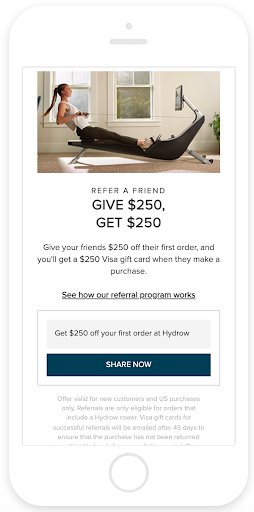
The basic give-get offer already has a retention loop. A friend receives a discount. The advocate earns a credit once that friend completes a qualifying purchase. That credit is only useful if the advocate comes back.
Use a reward with a clear value, make it easy to find, and set the qualification rules before launch. A $20 store credit after a first friend purchase is cleaner than an ambiguous reward-coming-soon email.
For brands with a natural replenishment cycle, time the advocate reminder around when the reward is likely to matter. A skincare brand might surface it before a replenishment window. A higher-consideration brand may need a longer expiration period and a more useful reward.
Measure the loop
- Advocate reward redemption rate
- Days from reward issuance to the advocate’s next purchase
- Repeat purchase rate for advocates who redeem versus those who do not
2. Give dormant customers a reason to re-enter
A generic win-back discount asks a lapsed customer to buy again before you have rebuilt any interest. A referral invitation gives them another path back: share something useful with a friend and earn a reason to return.
Keep the offer specific. Give a friend $20 and get $20 after their first order is easier to understand than a vague reactivation campaign. If the customer shares but does not buy right away, that action still creates a new touchpoint and a reward they can use later.
Build a segment around a real lapse threshold for your category, exclude customers with unresolved service issues, and cap frequency. Nobody wants a brand that suddenly remembers them every four days.
Run a holdout
Compare a referral-led win-back message with your standard discount-led message. Look past open rates. The useful question is whether you get more reactivated customers, more qualified referred customers, or better contribution margin after reward cost.
3. Make referrals part of loyalty, not a side quest
When loyalty and referral live in separate systems, customers often see two disconnected programs. They earn points for buying and a coupon for referring, but neither behavior helps them feel like a more valuable member.
A better setup gives referrals a place in the loyalty economy. A successful referral can earn points, move a member toward a tier threshold, or unlock a benefit that feels more personal than another discount. For some brands, early access is more compelling than credit.
- Give loyalty points only after a referred customer completes a qualifying purchase.
- Let referrals count toward a VIP milestone alongside spend or engagement.
- Offer members first access to a referral event rather than increasing the reward for everyone.
4. Use referrals to build launch momentum
Product launches and restocks tend to lean hard on paid media and email. Your existing customers are already the audience most likely to care. Give them a way to invite people who are likely to care too.
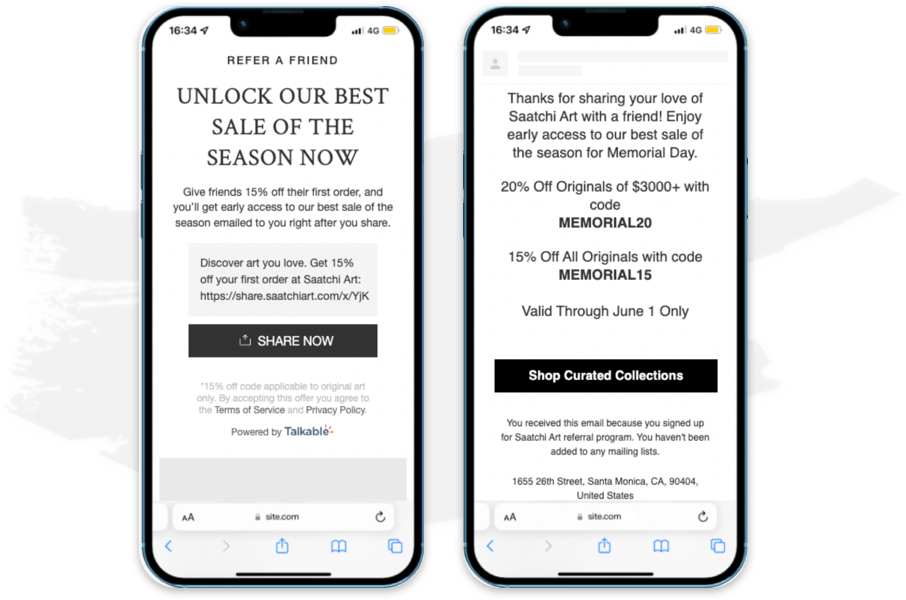
A waitlist is a clean place to start. Customers can move up the list after a friend signs up, earn early access after a friend takes a qualifying action, or unlock a launch-only benefit. The customer knows what they are working toward. The brand gets a warmer, attributable audience than a generic social share.
Build the campaign around one outcome
Do not ask one referral campaign to solve acquisition, retention, loyalty, and launch demand all at once. Pick the primary job. Then choose the audience, incentive, qualification rule, and follow-up message around that job.
That is where a flexible referral program earns its keep. It gives you more than a link at checkout. It gives you a customer-led growth channel that can support the moment your business is in.
Talkable’s referral marketing platform helps brands run referral programs across the lifecycle, with the controls to reward real customer advocacy and measure what happens next. Talk to our team to map a program to your next retention or launch goal.