
If you don’t know what referral marketing is, you might miss one of the most cost-effective ways to get new customers. In this article, we’ll tell you more about referral marketing, cover the difference between word-of-mouth and referral marketing, show you the benefits of refer-a-friend programs, and show you how referral marketing can generate revenue.
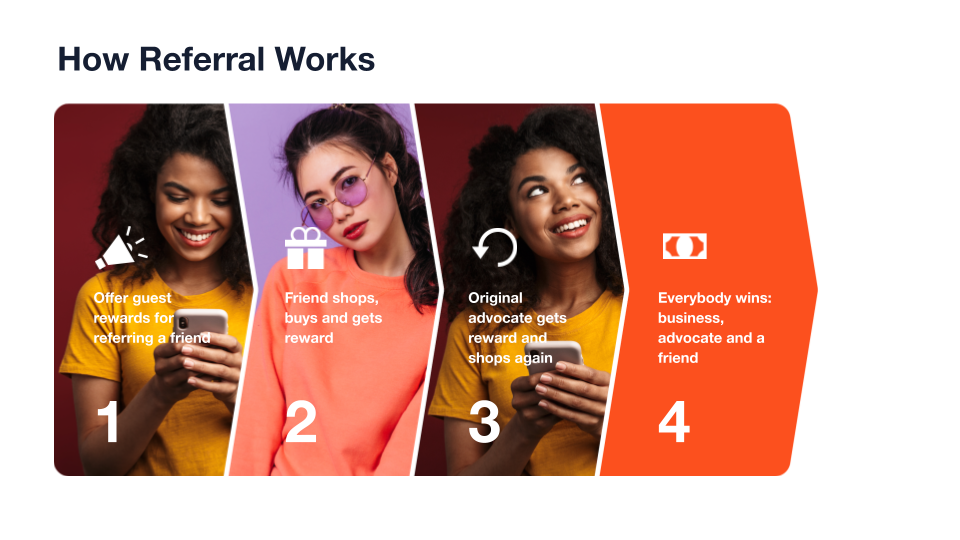
Remember the last time your friend shared a promo code with you or a discount on a first purchase? If you used that code and made the purchase, it is most likely that you’ve been a part of a referral marketing campaign.
If you don’t know what referral marketing is, you might miss one of the most cost-effective ways of getting new customers through word-of-mouth.
The mind-blowing referral marketing statistics speak for themselves:
Referral program formats: what actually changes
There is no single referral program model. The right version depends on the product, the buying cycle, and the kind of relationship customers already have with the brand. A beauty subscription brand may use credit to bring advocates back. A premium apparel brand may use early access. A service business may make the friend offer the bigger incentive because the first conversion takes more consideration.
Start with the reward structure
Two-sided offers are the familiar give-get model: the customer receives a reward for a qualified referral, and the friend receives a reason to try the brand. One-sided offers put the reward entirely with the advocate. Multi-offer programs change the reward by customer segment, order value, or campaign. The cleanest choice is the one that feels fair to both people and can be explained in a sentence.
Then decide when to ask
Referral is strongest when the ask follows a moment of proof. That might be delivery, a second order, a five-star review, a resolved support issue, or a member milestone. Pre-purchase programs can work for waitlists, gifts, and community launches, but they need a real reason for someone to share before they have used the product themselves.
Make the share path match the customer
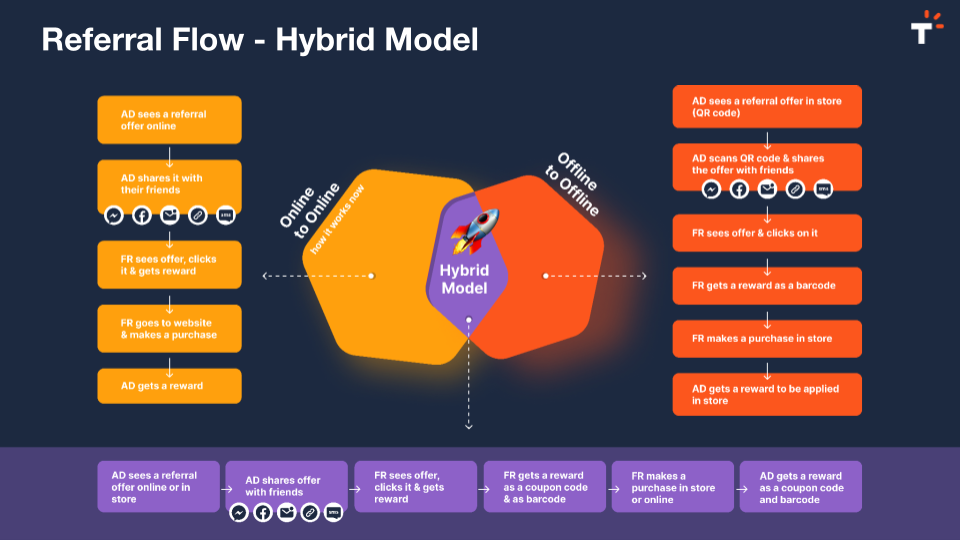
Email, text, a personal link, a QR code, and in-person prompts can all work. The useful question is not which channel is newest. It is where a customer is already likely to tell someone about the brand. A post-purchase email can open the door, while a share link makes the recommendation easy to pass along in the moment.
Keep advocates distinct from paid partners
A customer referral is not an influencer campaign with a smaller audience. Customers share a personal experience; creators and ambassadors usually work under a commercial agreement. Both can sit in a broader advocacy strategy, but the offer, disclosure, reporting, and relationship should be designed for the role.
Referral Marketing or Word-Of-Mouth?
Whenever you come across a product or service you like, chances are you will mention them to your friends or relatives. If you don’t get any incentives to do that, the whole process can be called word-of-mouth marketing.
If you heard about a product from a friend and didn’t receive an incentive, chances are you just experienced word-of-mouth marketing. However, if a friend sent you a Facebook message or an email with a referral code or a discounted offer, this would be an example of referral marketing.
A great example of word-of-mouth marketing is the story behind the Parisian “My Little Paris” media brand. They started in 2008, with one person emailing to her 50 friends about a secret neighborhood she discovered. In six months their mailing list grew to 10,000 people because women were begging to be added to it. Three years later the newsletter had 800,000 subscribers. In 2017 this number skyrocketed to 4 million.
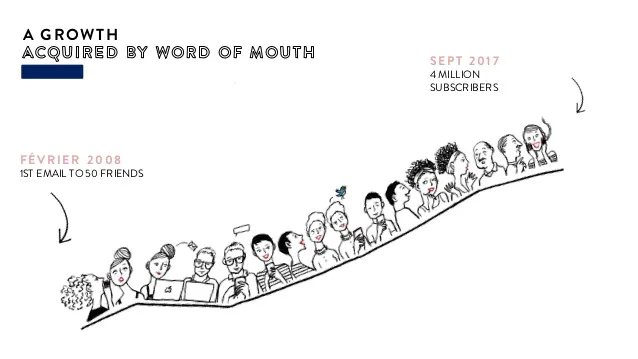
What is the secret behind its success? Apart from newsletters being the genius of content marketing with their witty, compelling writing, it is also about sharing a small secret with a friend. The end of each newsletter had a button with “Share with a friend (or five)” written on it. That is word-of-mouth marketing.
Comparing word-of-mouth marketing and referral marketing
Both approaches depend on customers saying something positive about a brand. Referral marketing does not replace word of mouth. It gives a real recommendation a clearer offer, a share path, and a way for the brand to learn from the outcome.
| What changes | Word of mouth | Referral marketing |
|---|---|---|
| The reason to share | A customer has a good experience and mentions it naturally. | A customer has a good experience and a clear give-get offer to pass on. |
| The path | Any conversation, post, or recommendation. | A personal link, code, invite, or other trackable route. |
| What the brand can learn | Often nothing directly. The recommendation may happen entirely out of view. | Which offers, moments, audiences, and share paths lead to quality customers. |
A reward cannot create trust. It can only make a genuine recommendation easier to act on.
The Benefits Of Using Referral Marketing
Referral marketing is a high-performing channel that can help your business grow by attracting new customers and helping generate more revenue for your company. For instance, Dropbox managed to achieve a 3900% in user growth in 15 months by launching a double-sided referral program.
When creating a marketing plan, marketing specialists consider channels via which they can reach their target audience. They create yet another paid advertisement on various channels in the hope to be noticed. However, since reaching their target audience is their main goal, there is one tool they might be forgetting about leveraging their existing customer base.
If you need more reasons to give referral marketing tools a try — here they are:
How to build a referral program customers will actually use
The mechanics are simple. The hard part is making the invitation feel natural, the offer easy to understand, and the path from share to reward free of surprises. Start with one clean version of the program, then improve it from real customer behavior.
Find the moment that earns the ask
A share request makes more sense after a customer has felt the value: a successful delivery, a second purchase, a good review, a support win, or a membership milestone. Asking too early turns a recommendation into a favor. Asking after a good experience gives it a reason.
Make the offer legible in one pass
A friend should be able to answer three questions quickly: what do I get, what does my friend get, and when does it arrive? If the answer needs a paragraph of fine print, the offer is doing too much. Clear give-get offers tend to travel farther because customers can explain them without translating them.
Put the program where customers already are
The referral destination should not be hidden in a footer. Give it a home in post-purchase email, account pages, loyalty messages, packaging, and customer support touchpoints. The right placement depends on the brand, but the rule is simple: do not make a motivated customer hunt for a way to share.
Improve one handoff at a time
Do not change the reward, message, audience, and landing page all at once. Start with the biggest point of friction: low participation usually points to discovery or timing, while strong sharing with weak friend conversion points to the offer or the destination. A clean test gives the team a useful next move.
Choose a reward that fits the relationship
The best reward is not automatically the biggest one. It is the one that feels fair to both people and makes sense for the product being recommended.
Common questions before launch
What is a good referral reward?
A good reward has obvious value and matches the brand. Credit, product, early access, and a charitable give-back can all work when the customer understands the exchange right away.
Should both people get a reward?
Usually, yes. A two-sided offer gives the advocate a reason to share and the friend a reason to try the brand. One-sided offers can make sense in specific membership or ambassador programs.
When should the referral reward be delivered?
Tie it to the action that creates real value, often a first qualifying purchase. Be plain about timing, exclusions, and any return window so customers are never surprised.
How do you prevent referral fraud?
Set clear eligibility rules, watch for duplicate or suspicious behavior, and delay rewards until the qualifying order is valid. Fraud controls should protect the program without making legitimate customers feel accused.
Why You Should Try Referral Marketing No Matter What
Naturally, you want your refer-a-friend campaigns to be a success, but if things go south this doesn’t mean all of your hard work was for nothing. A referral can act as the introduction to your brand, which results in better brand awareness. Although brand awareness wasn’t the conversion you may have been looking for, it’s the beginning of a potential customer relationship.
Setting up a referral marketing program can be a lot of trouble if you do it on your own. However, it’s not as tiresome if you have a reliable and strategic partner. We have done it for over 250 brands. Contact us to get more information about referral advertising – we’d love to share our best practices with you.
Meanwhile, here are referral program case studies for handcrafted bracelets store, phone case retailer and cosmetics brand.