
Mother’s Day is one of those holidays where brands can either sound genuinely useful or painfully generic.
There is not much middle ground.
The lazy version is easy to spot. A promo code. A pink email. Maybe a subject line with “Mom deserves it.” Fine. It will probably get a few clicks because the buying intent is already there.
The better version does more than discount. It gives customers a reason to share something that already feels timely. A gift idea. A sale worth forwarding. A reward that makes sense for the season. A little nudge at exactly the moment someone is already thinking, “What should I get?”
That is why Mother’s Day is such a good referral moment.
According to the National Retail Federation, Mother’s Day spending is expected to hit a record $38 billion this year, with online shopping tied as a top destination at 33%. Flowers, cards, outings, gift cards, and clothing are still the obvious categories, but the real story is broader: people are actively looking for ideas, and they are willing to spend when the offer feels right.
Referral works well here because the ask is natural. You are not begging someone to promote your brand. You are helping them pass along a useful gift idea.
I pulled two 2026 Mother’s Day campaigns from the Talkable referral platform that do this well: RTIC Outdoors and Native Shoes. RTIC is live, Native Shoes is in test, and both have lessons worth stealing.
1. RTIC Outdoors: make the seasonal promo do double duty
RTIC is the cleanest live example in the set.
They are running a full Mother’s Day campaign stack: standalone landing page, post-purchase popup, account dashboard, and ineligible campaign. That matters. A seasonal campaign should not live in one lonely place and hope customers find it.
RTIC threads the offer through multiple surfaces:
- Standalone page for intentional sharing
- Post-purchase popup when the customer is warm
- Account dashboard for returning customers
- Ineligible flow so awkward edge cases do not break the experience
The offer is also straightforward: friends get 10% off their first order, advocates get $20 after purchase. The Mother’s Day layer comes through in the creative: “Free Gifts for Mom,” drinkware, personalization, and a bundle/save message.
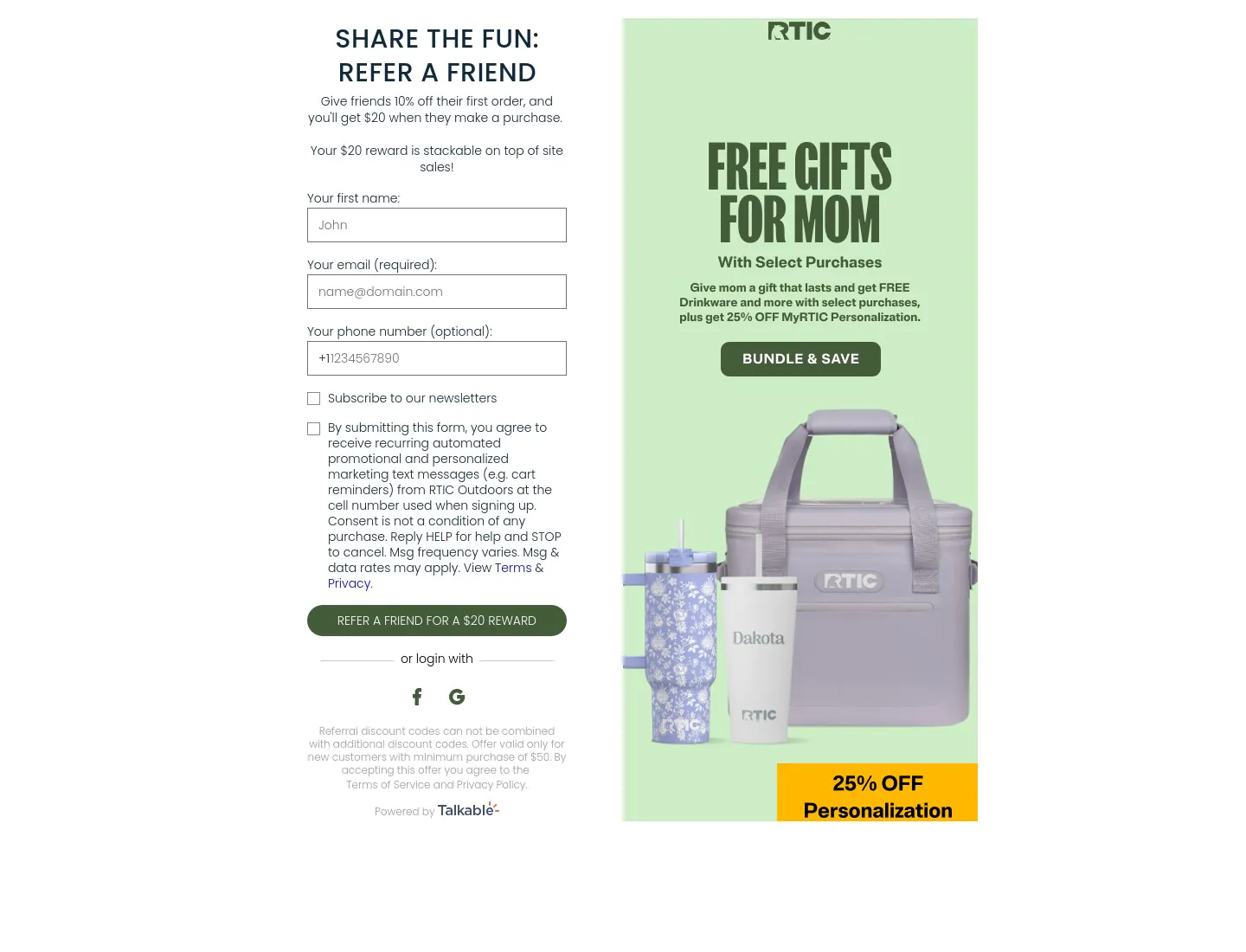
What I like: the referral mechanic stays simple. The seasonal merchandising does the emotional work.
A lot of brands overcomplicate holiday referrals. RTIC does not. The customer sees the offer, understands the reward, and gets a Mother’s Day reason to share.
The post-purchase moment is doing real work
The post-purchase popup is probably the most valuable placement here. The customer just bought something. They are happy enough to finish checkout. They have the brand top of mind.
That is the moment to ask for a share.
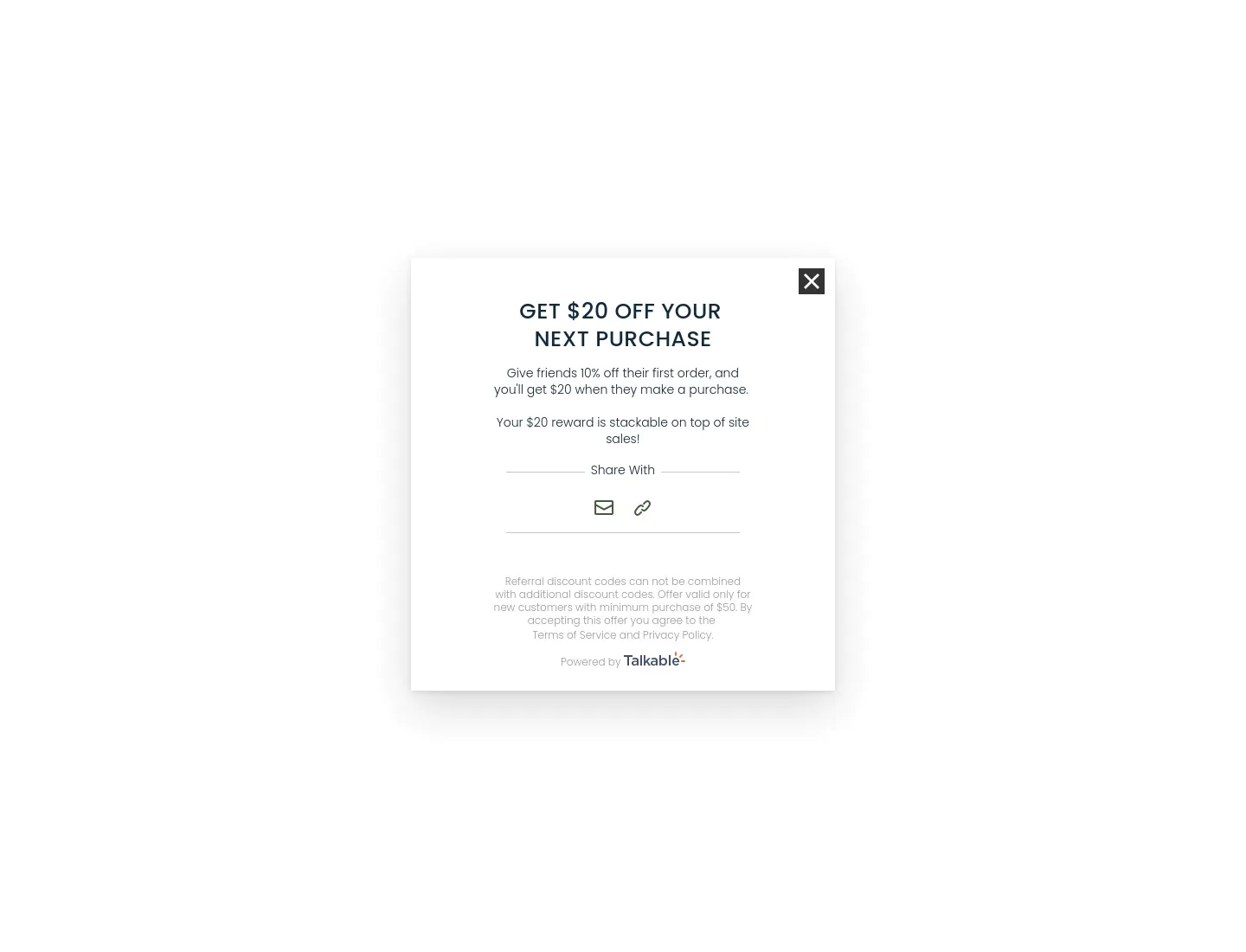
The design is minimal, which is a good call. Post-purchase popups should not feel like a second checkout. This one gives the customer two fast options: email or link.
Steal this: if a seasonal campaign matters, give it more than one placement. Landing page plus post-purchase plus dashboard is a real campaign. One email is not.
2. Native Shoes: make sharing feel like sending the sale
Native Shoes takes a different angle. Instead of making the referral reward the hero, the campaign positions the share as a way to pass along the Mother’s Day sale.
The headline is blunt in the best way:
Mother’s Day Sale. Treat Mom to 30% Off.
That is the whole job.
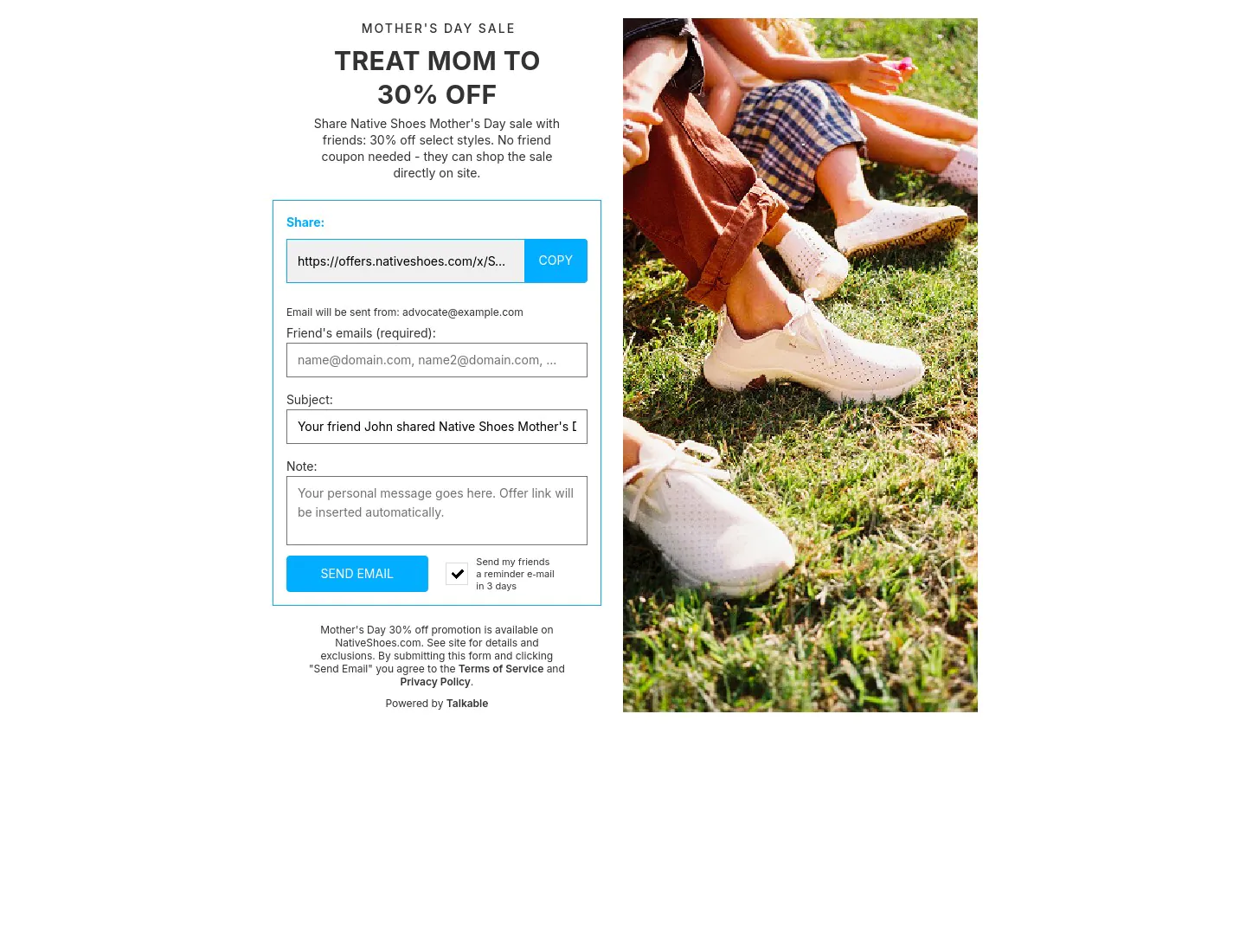
I like this because it removes friction. The advocate does not have to explain the brand, the promo, or why the timing matters. The campaign does that for them.
There is also a smart line in the copy: “No friend coupon needed.” That is not glamorous, but it is useful. It tells the advocate there is nothing complicated to manage.
This is especially good for apparel and footwear, where Mother’s Day buying can be a mix of self-gifting, family gifting, and “I saw this and thought of you.” Native lets the sale be the reason to share.
Steal this: sometimes the referral program should not be the headline. The sale is the headline. Referral is the distribution layer.
What the best Mother’s Day campaigns have in common
The good ones are not complicated. They just respect the holiday.
They understand that Mother’s Day shoppers are looking for a reason, not a lecture. The campaign has to answer a simple question fast: why should I share this now?
The examples above do that in different ways:
- RTIC uses seasonal merchandising and puts the campaign across multiple placements.
- Native Shoes turns the referral into a way to share the sale.
That is the pattern.
Not “please refer a friend.”
More like: “Here is something worth sending because the moment makes sense.”
A quick checklist for next year
If you are planning a Mother’s Day referral campaign, I would keep the brief painfully simple.
Start with the gift reason. Do not open with the mechanics.
Make the offer obvious. Give/get, minimum purchase, and exclusions should be easy to scan.
Use the right placements. Post-purchase, account dashboard, and standalone pages all play different roles.
Keep sharing lightweight. Email, copy link, SMS. Do not make customers work.
Plan the edge cases. Existing customers, self-referrals, expired offers, and no-coupon states should still look intentional.
Refresh the creative. Seasonal campaigns should not look like evergreen referral pages wearing a pink hat.
Mother’s Day is not just a promo window. It is a referral window.
People are already asking friends and family what to buy. Good campaigns make that conversation easier, trackable, and worth something for everyone involved.
That is the whole game.
Seasonal referral campaigns work best when the holiday gives customers a real reason to share. The offer matters. The moment matters more.
Ready to build seasonal referral campaigns that actually get shared? Let’s talk referral revenue.