
Memorial Day is a noisy weekend for ecommerce. Every brand has a sale. Every homepage is yelling.
RTIC did something smarter. They used the holiday moment to make referral work harder.
Instead of treating referral like a little widget off to the side, RTIC put the offer into the parts of the customer journey where people were already primed to buy and share: post-purchase, standalone referral pages, and customer account touchpoints.
The story is not just that referral revenue went up. The better story is that the whole funnel got bigger, and the buyers coming through it were worth more.
The short version
daily referral revenue
daily referral sales
advocate impressions
average order value
That comparison uses May 1-20 as the baseline and May 21-27 as the Memorial Day window.
What changed during Memorial Day week
RTIC’s Memorial Day campaigns took over the highest-intent referral placements. The post-purchase popup became the main engine, with the standalone referral page supporting customers who came in through a more direct sharing path.
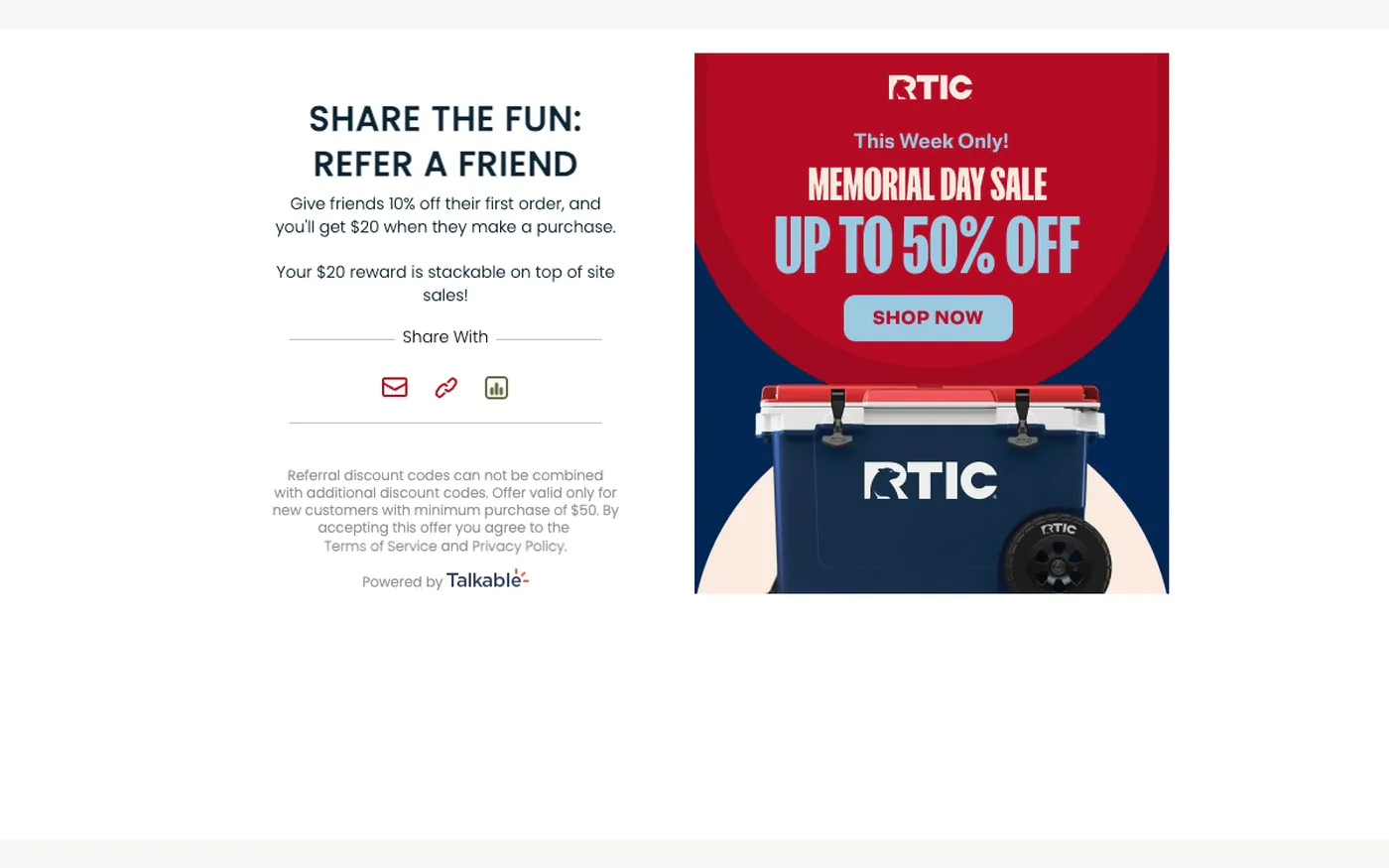
The Memorial Day campaign set drove almost all advocate impressions during the holiday window. That matters because the holiday did not just sit in one isolated campaign. It showed up where referral could catch real shopping intent.
The funnel did not just get wider. It got better.
Reach was the first obvious lift. Advocate impressions rose 87%. Sharers rose 76%. Shares rose 76%. Site visits rose 75%.
That would already be enough for a decent holiday readout. But the stronger signal came later in the funnel.
That is why daily referral revenue grew 143% while impressions grew 87%. The top of the funnel expanded, and the bottom of the funnel performed better.
This is the part most brands miss. Holiday referral is not only a reach play. It can be a buyer-quality play too.
The offer was easy to understand
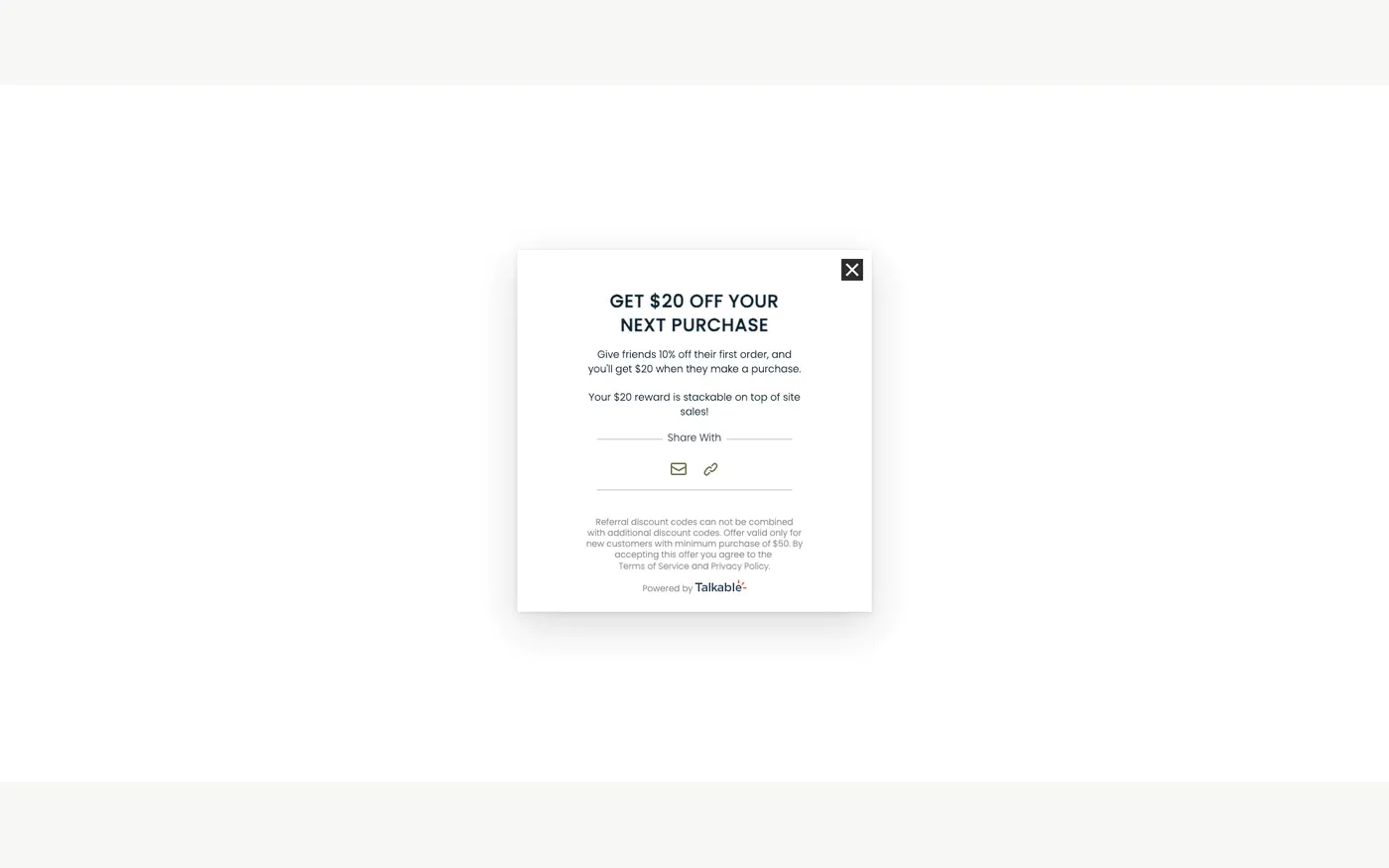
RTIC’s share creative kept the customer math simple: give friends 10% off, get $20 off a future purchase. No scavenger hunt. No cute-but-confusing promo language.
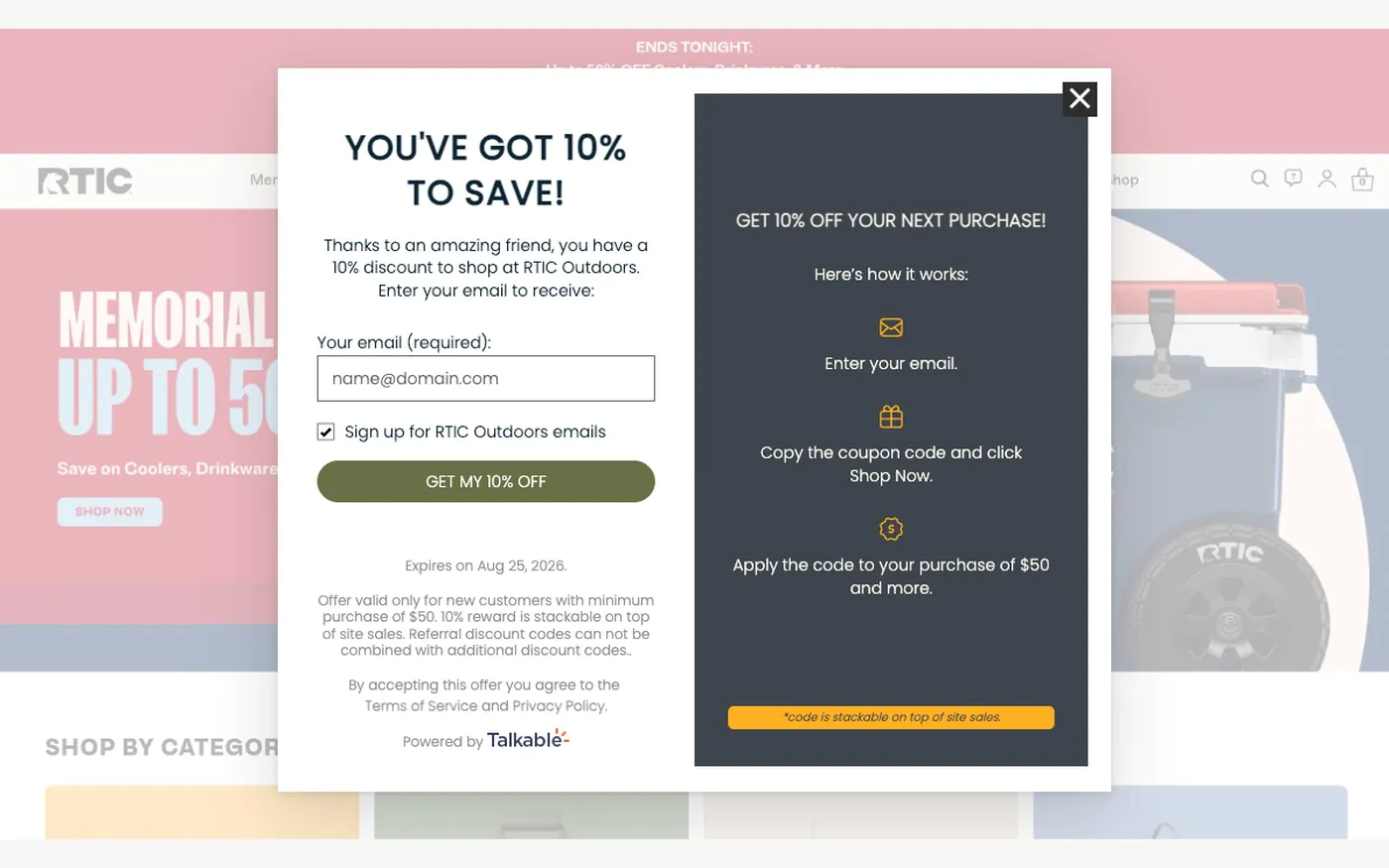
That matters because customers do not want to explain your mechanics for you. If the reward takes too long to repeat, sharing gets weird. RTIC avoided that.
The campaign stack did the work
The Memorial Day campaigns created the reach. The evergreen post-purchase program and spring sale campaigns converted a lot of the holiday demand around it.
That is not a flaw in the story. It is the story.
Good referral programs are not one-off stunts. The seasonal campaign gives the customer a timely reason to act. The always-on referral engine catches the rest of the buying behavior around it.
Why this worked
The takeaway
RTIC did not need referral to replace its Memorial Day sale. That would be the wrong job.
The job was to make the sale travel farther through customers who already had a reason to talk about the brand. That is exactly where referral earns its keep.
For brands planning the next holiday weekend, the playbook is pretty blunt:
- Use the sale to create urgency.
- Use referral to turn that urgency into distribution.
- Measure the full funnel, not just shares.
- Watch friend conversion and AOV. That is where the real story usually shows up.
Want to turn seasonal demand into referral revenue? Let’s talk referral.